A folding scooter can look like the perfect answer until it has to fit in the car, turn through a hallway or be lifted into storage. Use this mobility scooter buying checklist to prepare a shortlist before you place an order.
Affiliate disclosure: we may earn a commission if you purchase through our retailer links. Retailers handle purchases and returns. This documentation-based guide does not claim personal testing or an individual medical assessment.

The useful answer
Start with the person, the route and the transport plan. Then verify the exact model’s dimensions, weight, operating limits, support and return terms in writing. “Portable” and “travel-friendly” are descriptions to investigate, not proof that a scooter fits your circumstances.
Start with the intended use
Write a plain-language use case: visiting a particular supermarket, travelling between rooms or going on a family outing. Note the actual route and the assistance available. This helps you ask specific questions rather than choosing from a list of attractive features.
Scooters are mobility equipment, not an automatic substitute for another device. MedlinePlus recommends healthcare-provider or physical-therapist input when selecting a mobility aid. Ask about suitability and training if you are unsure whether you can transfer, steer, see and respond appropriately for the intended use.
Make a three-part measurement sheet
| Person and use | Home and route | Vehicle and storage |
|---|---|---|
| Questions about seating and control access | Narrowest clear doorway and turning space | Boot/trunk opening, not just internal volume |
| Expected trips and assistance | Thresholds, slopes and surface conditions to discuss | Full weight and heaviest removable section |
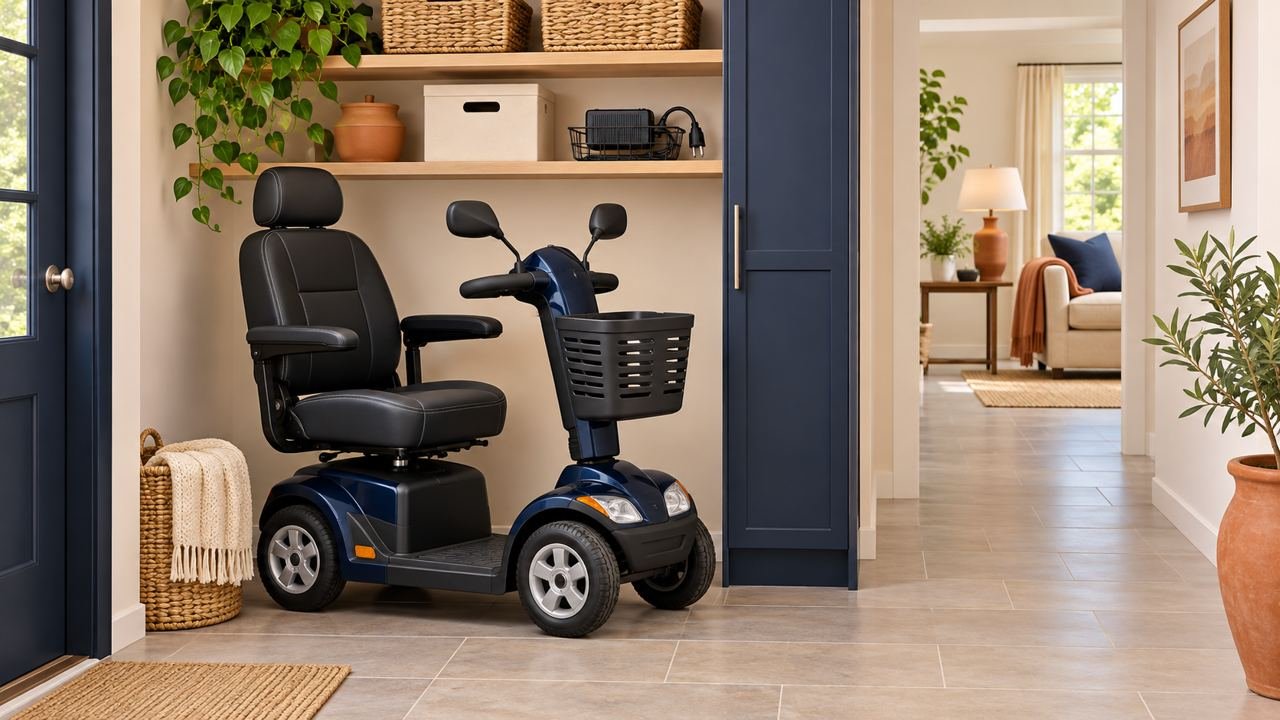
| Professional advice about suitability | Dry, accessible storage and charging location | Who handles loading and any lifting aid |
These are information-gathering categories, not universal pass/fail limits. A supplier should compare your measurements with the exact model and explain any uncertainty.
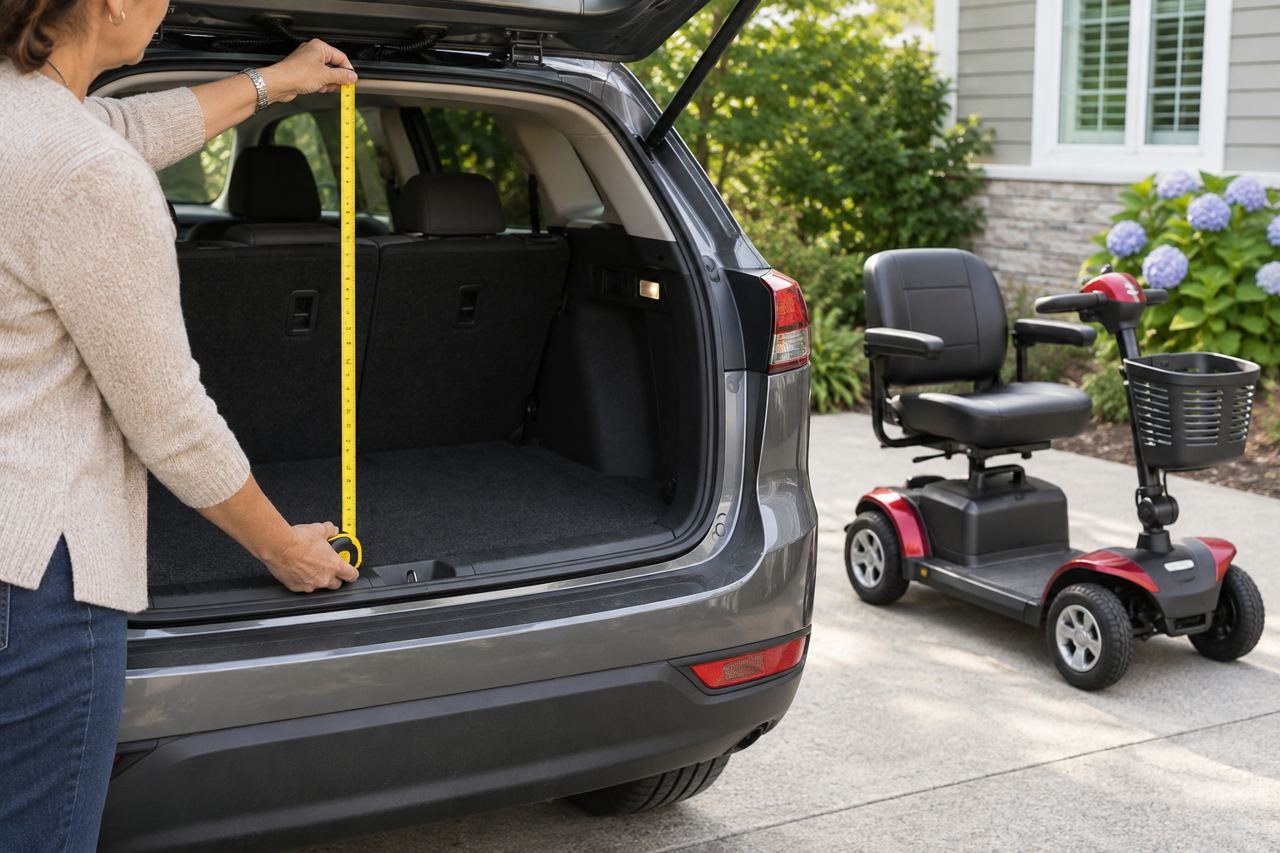
Distinguish folded size from lifting weight
A scooter may fold into a smaller shape without becoming lighter. Ask for the full assembled weight, whether the battery is included in that number, and the heaviest part after disassembly. Find out which steps require bending, reaching or lifting. If someone else will load it, include that person in the decision.
An illustrative shortlist could include two scooters with similar folded dimensions but very different loading steps. Write out the sequence: remove accessories, release a latch, fold or separate the frame, lift, secure. The sequence can matter more than a headline weight.
Treat range and terrain claims carefully
Ask for the manufacturer’s range-testing conditions and operating manual. Advertised range is not a guarantee for your route. Confirm permitted surfaces, slope limits, user-weight rating and charging instructions for the specific model. Do not choose a device solely because its advertised maximum exceeds an estimate of your usual trip.
If travel matters, check the carrier separately
Do not treat “airline approved” in a listing as permission for every flight. Obtain the battery specifications and contact the airline or transport operator for its current mobility-device rules and handling process before booking. Check the actual route, connections and assistance arrangements. A folding mechanism does not answer battery or carriage questions.
Ask what happens after delivery
- What delivery service is included: curbside, inside delivery or assembly?
- Who handles setup, adjustment and instruction?
- Who provides local or remote service if something stops working?
- What parts are covered by the warranty, and who pays associated labor or freight?
- Is the battery covered under separate terms?
- Are replacement parts available for this exact model?
Get return terms before paying
Ask for the applicable policy for the chosen brand and model, including authorization deadlines, condition requirements, packaging, return freight and restocking charges. Do not assume a trial offer applies to every item in a retailer’s catalog. Save the written answers alongside the product specifications.
Decide with a written comparison
Keep the shortlist small and mark unanswered questions clearly. A model is not ready for purchase just because its dimensions appear to fit. Review suitability, transport, service and return information together. Mobility Department is one retailer you can explore using this checklist; we have not tested its scooters or verified a particular model for your needs.
For the home route, see our home mobility checklist. If you are comparing walking aids instead, start with walker vs rollator.
Source and scope
General device-selection reference checked November 28, 2026: MedlinePlus: mobility aids. The shopping worksheet is original editorial guidance. No model-specific performance, price or insurance coverage is promised.