A walker and a rollator can look similar in a product listing, but they ask different things of the person using them. Start with the type of support a professional recommends, then compare the practical details that affect your daily route.
Affiliate disclosure: we may earn a commission if you purchase through our retailer links. Retailers handle purchases and returns. This documentation-based guide does not claim personal testing or an individual medical assessment.
The useful answer
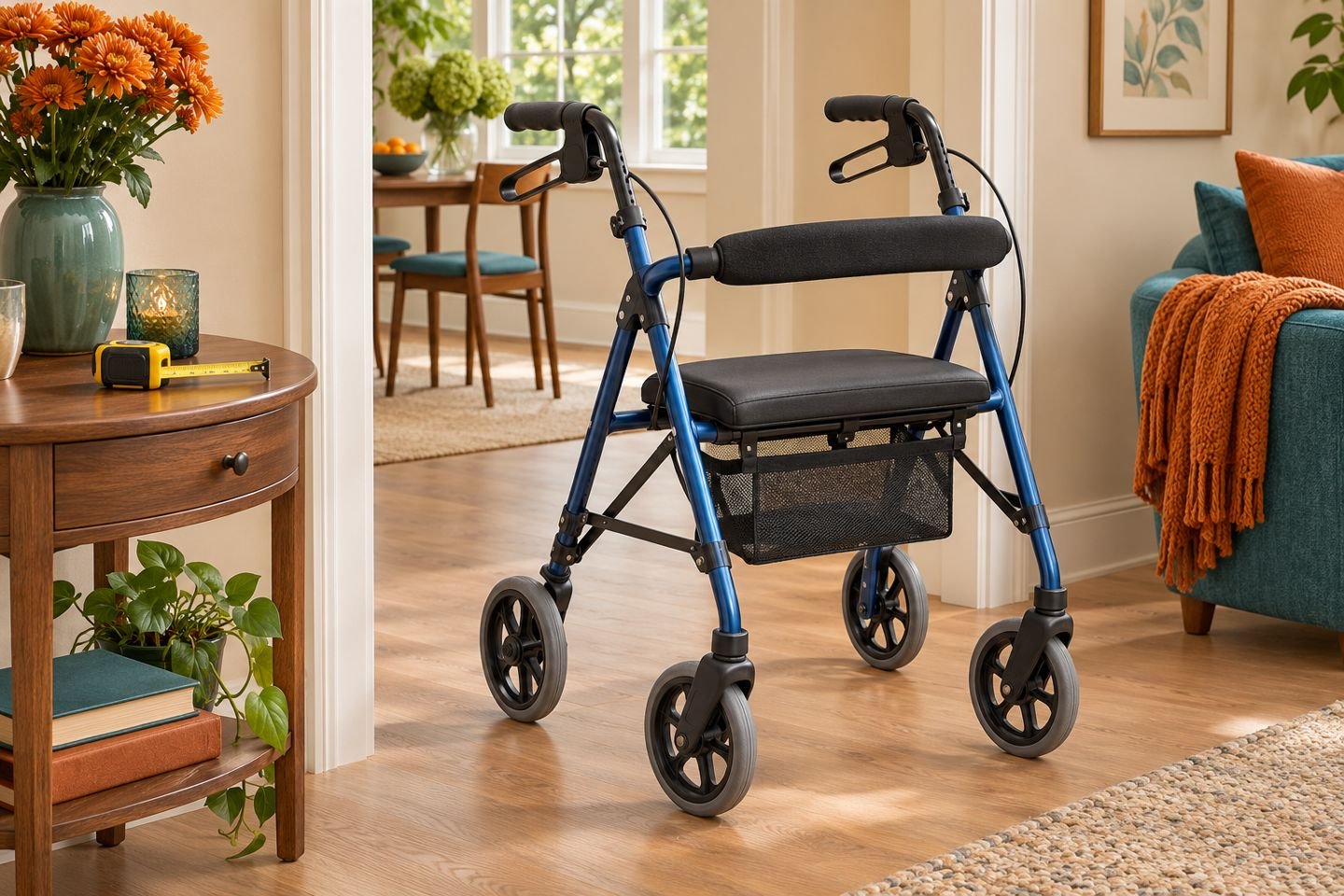
A standard walker, a two-wheel walker and a four-wheel rollator are different categories. A seat or a lower product weight does not make one the right choice for everyone. Ask a healthcare professional about the appropriate category, fit and use before shopping by features.
Understand what the names mean
A standard walker has four legs and is lifted to move forward. A front-wheeled walker has two wheels at the front. A four-wheel rollator rolls and generally includes hand brakes; many have a resting seat. Product names vary, so check the actual design rather than relying only on a listing title.
The AGS Health in Aging Foundation explains that four-wheel walkers require more control and that choosing the right device and learning to use it matter. This guide compares shopping questions rather than deciding how much support you personally need.
| Category | What to inspect | Question to bring to a professional |
|---|---|---|
| Standard walker | Adjustment range, folding mechanism and overall width | Is a device that must be lifted appropriate for me? |
| Front-wheeled walker | Rear tips, wheel design and overall dimensions | Does this type match my support and walking needs? |
| Four-wheel rollator | Brake operation, seat dimensions and folded size | Can I control this device and use its brakes reliably? |
Measure the route, not just the doorway
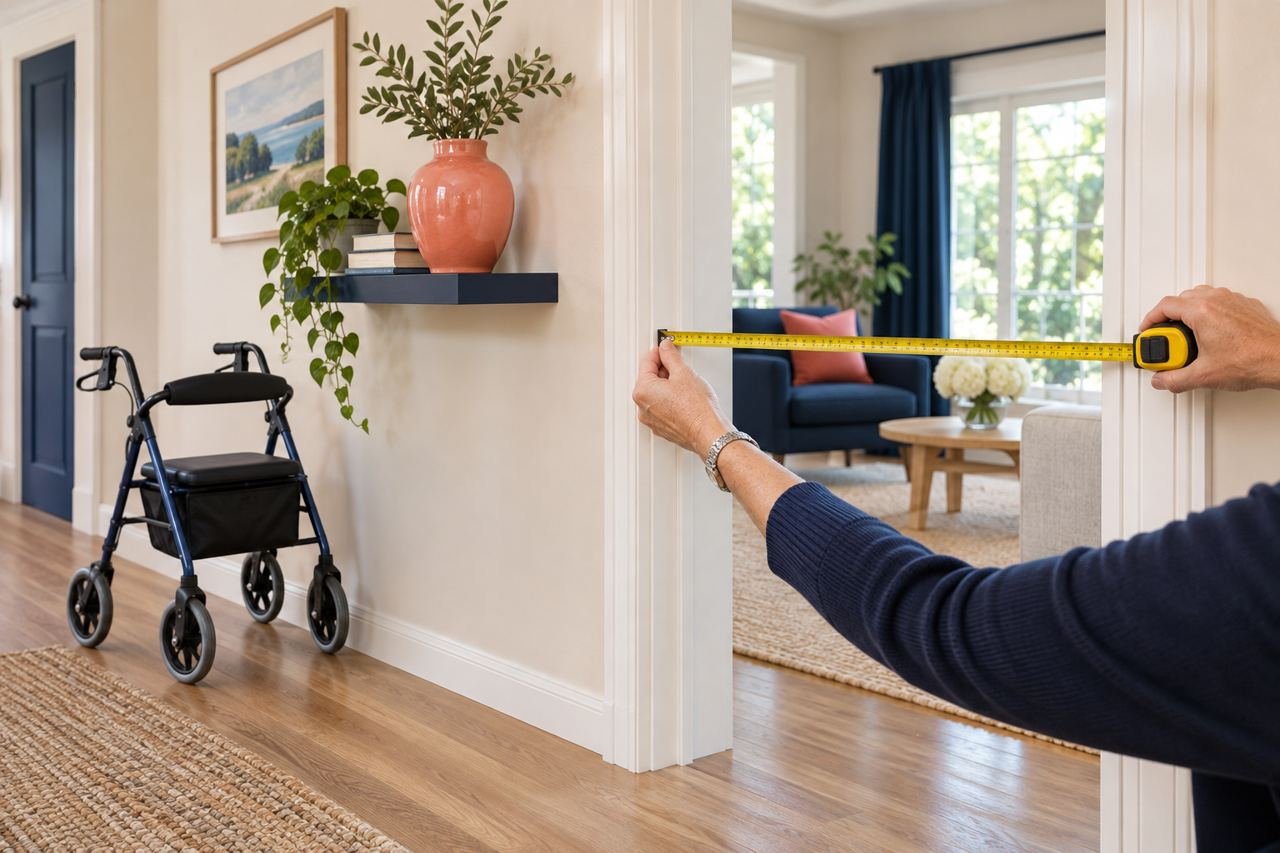
Write down the usable opening at the narrowest doorway on your regular route. Include the space left when the door is open and any furniture immediately beyond it. Then check the manufacturer’s total device width, not just its seat width. A nominal door size is not necessarily the clear opening.
For example, an illustrative home survey might list a bathroom doorway, a tight turn beside the bed and the available storage corner. The purpose is to identify questions for the supplier; squeezing through one opening does not prove the whole route works.
Separate personal fit from household fit
Handle adjustment and seat dimensions concern the person. Overall width, turning space and folded dimensions concern the environment. Both need checking. MedlinePlus notes that some mobility aids require fitting and sufficient strength or balance to use safely. If a device feels awkward or your needs have changed, seek help rather than making the purchase decision from an online chart alone.
Ask about brakes and the seat
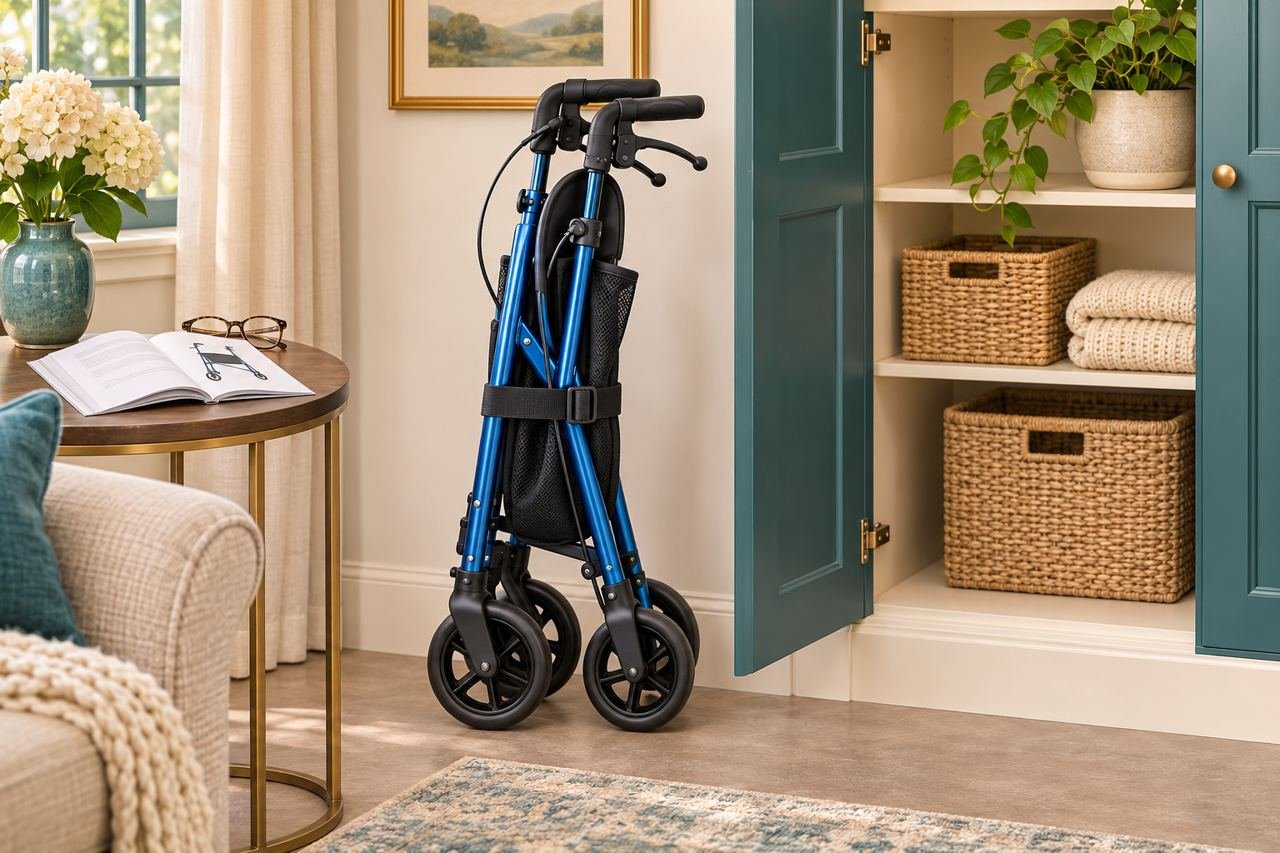
If considering a rollator, ask for the instructions for the exact model. Can the intended user operate and lock the brakes comfortably? What does the manufacturer require before sitting? Is the seat intended only for stationary rest? Do not assume a rollator can carry a seated passenger while someone pushes it; a transport function must be explicitly designed and instructed by the manufacturer.
Check transport and storage honestly
- Compare the complete product weight with the weight of any removable pieces.
- Ask who will lift it and where it will be stored. A “lightweight” label is not a lifting assessment.
- Check whether the folded device stays closed and whether a bag or basket must be removed.
- Confirm the exact model’s user-weight rating and permitted use in its manual.
- Ask about replacement brake cables, wheels and tips before buying.
Read the return conditions before assembling
An equipment purchase may have condition, packaging or authorization requirements. Ask the retailer whether trying the device affects return eligibility, who pays shipping and whether any restocking fee applies. Save the answer and the exact product model. A generous headline is not a substitute for the policy attached to your order.
A useful shortlist is a short one
Choose a category with professional guidance, remove models that do not fit your route, then compare the remaining practical details. You can browse the range at Vive Health; browsing a retailer is not a recommendation for every product it carries.
Next: use our home mobility checklist to record everyday obstacles, or read the scooter shopping checklist for a different equipment category.
Sources and scope
Sources checked November 28, 2026: AGS Health in Aging Foundation: choosing a cane or walker; MedlinePlus: mobility aids. The measurement worksheet and purchasing questions are editorial planning aids, not clinical fitting instructions.